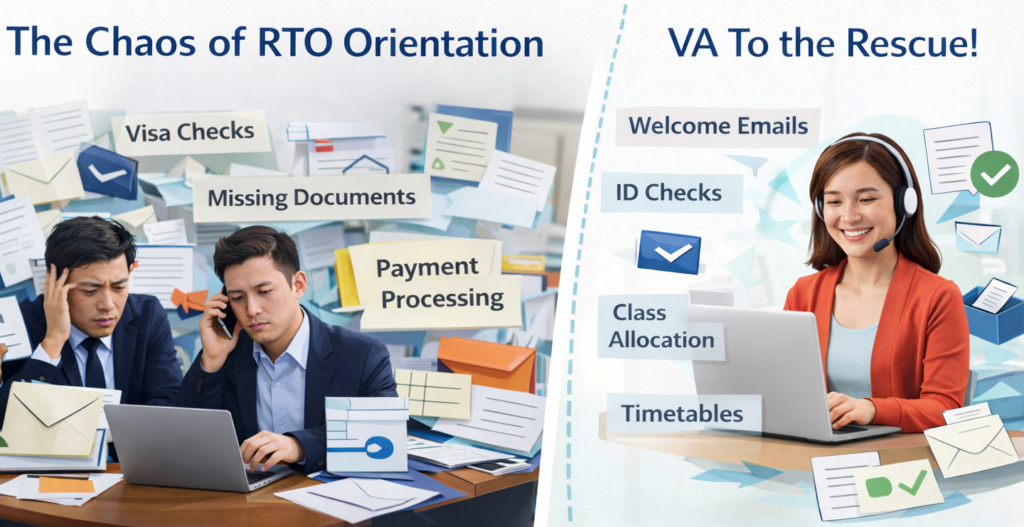
Orientation periods are some of the busiest times in the lifecycle of an RTO. New students are arriving, existing students are progressing, and staff are juggling enrolments, documentation, finance enquiries, agent communication and academic coordination — all at once.
With hundreds of small tasks happening simultaneously, it’s easy for essential items to slip through the cracks. Unfortunately, the tasks that get forgotten are often the ones most important for compliance, student satisfaction and operational flow.
The hidden workload inside orientation periods
Orientation is not a single event. It is a series of connected tasks that must be completed before, during and immediately after an intake.
Typical tasks include:
- Sending pre-arrival welcome messages
- Confirming visa and identity details
- Collecting missing documents
- Updating contact details
- Assigning students to classes
- Preparing timetable information
- Ensuring LMS access is set up
- Preparing orientation packs
- Processing payments
- Finalising enrolment conditions
- Communicating with agents and trainers
Most RTOs complete these tasks manually. When intake numbers increase or staff are already at capacity, items get missed — which then leads to confusion for students and additional admin work later.
Common tasks that get overlooked
Even experienced RTO teams unintentionally forget steps such as:
- Following up missing ID or certificates
- Sending orientation reminders
- Confirming attendance requirements
- Updating student addresses
- Assigning trainer groups
- Advising students of late-start procedures
- Monitoring students who do not attend orientation
- Setting up email/LMS accounts
These small gaps create bigger issues when students begin their classes unprepared or when compliance evidence is incomplete.
How a VA brings structure to the orientation process
A skilled VA can manage all the repetitive and time-sensitive tasks surrounding orientation, ensuring nothing is left incomplete. Their support commonly includes:
- Preparing pre-orientation checklists
- Completing missing data checks
- Sending welcome and reminder emails
- Allocating students to classes in advance
- Updating student records
- Managing document collection
- Tracking who has and hasn’t attended
- Preparing post-orientation follow-up messages
Because a VA works systematically, orientation becomes a smooth, organised process instead of a chaotic last-minute rush.
Improving the student experience
A good orientation sets the tone for the student’s entire journey. When students receive:
- Clear information
- Timely communication
- Accurate details
- Support before their first class
…They feel more confident and better supported by the college.
A VA ensures these touchpoints occur consistently, even during your busiest periods.
Compliance benefits
CRICOS providers in particular must maintain:
- Current contact details
- Evidence of orientation attendance
- Documented communication
- Student file completeness
A VA helps ensure all these items are captured properly and stored for future audit requirements.
Want stress-free orientation periods?
Speak with us about how a VA can manage your pre- and post-orientation workflows.